
TILF

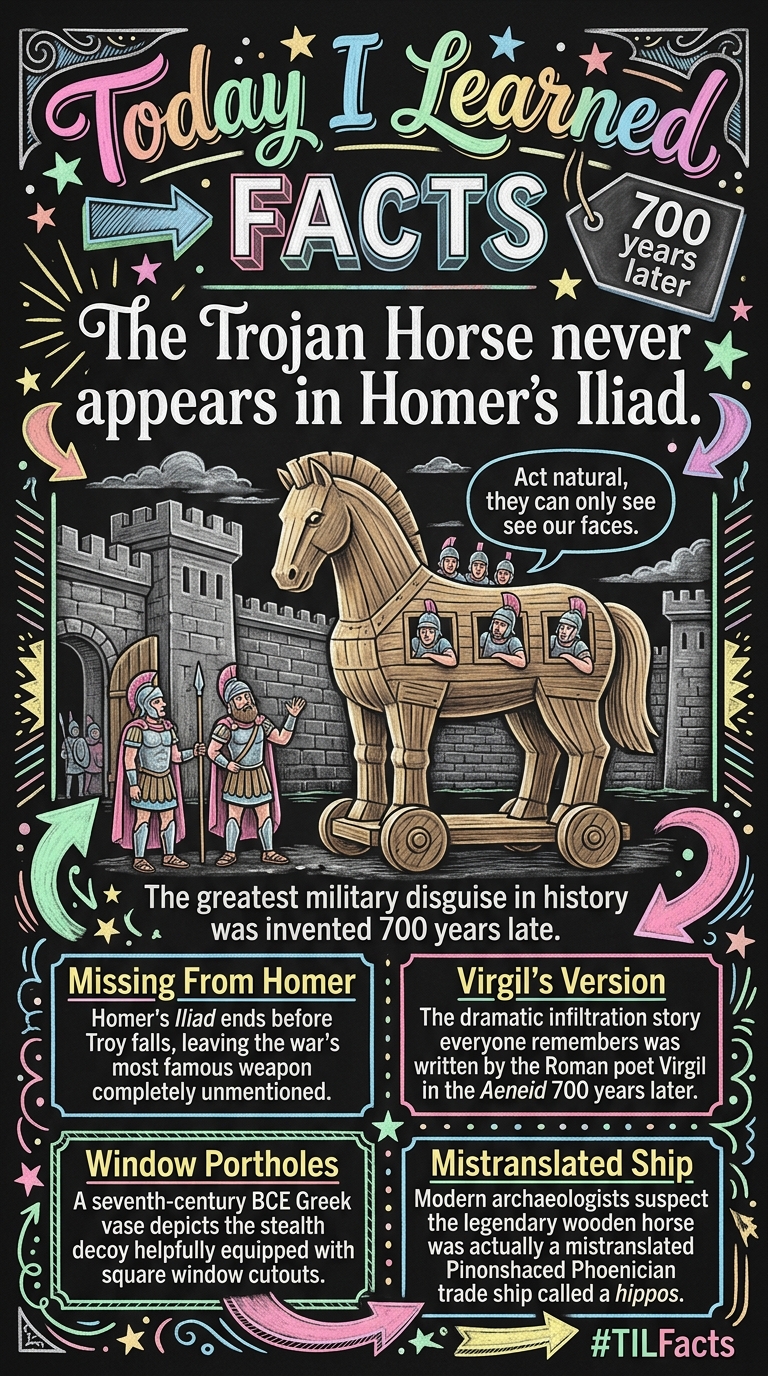
The Trojan Horse never appears in Homer's Iliad, was barely mentioned in The Odyssey, and everything we picture today comes from a Roman poet writing 700 years later.

History's most famous military ruse is completely absent from Homer's Iliad, which ends before Troy even falls. Homer barely gave the wooden horse a passing nod in The Odyssey, leaving the dramatic story we know today to Roman poet Virgil writing seven centuries later. Ancient Greek pottery even depicted the machine with bizarre window portholes, and modern archaeologists suspect the whole myth was just a mistranslated Phoenician trade ship. More

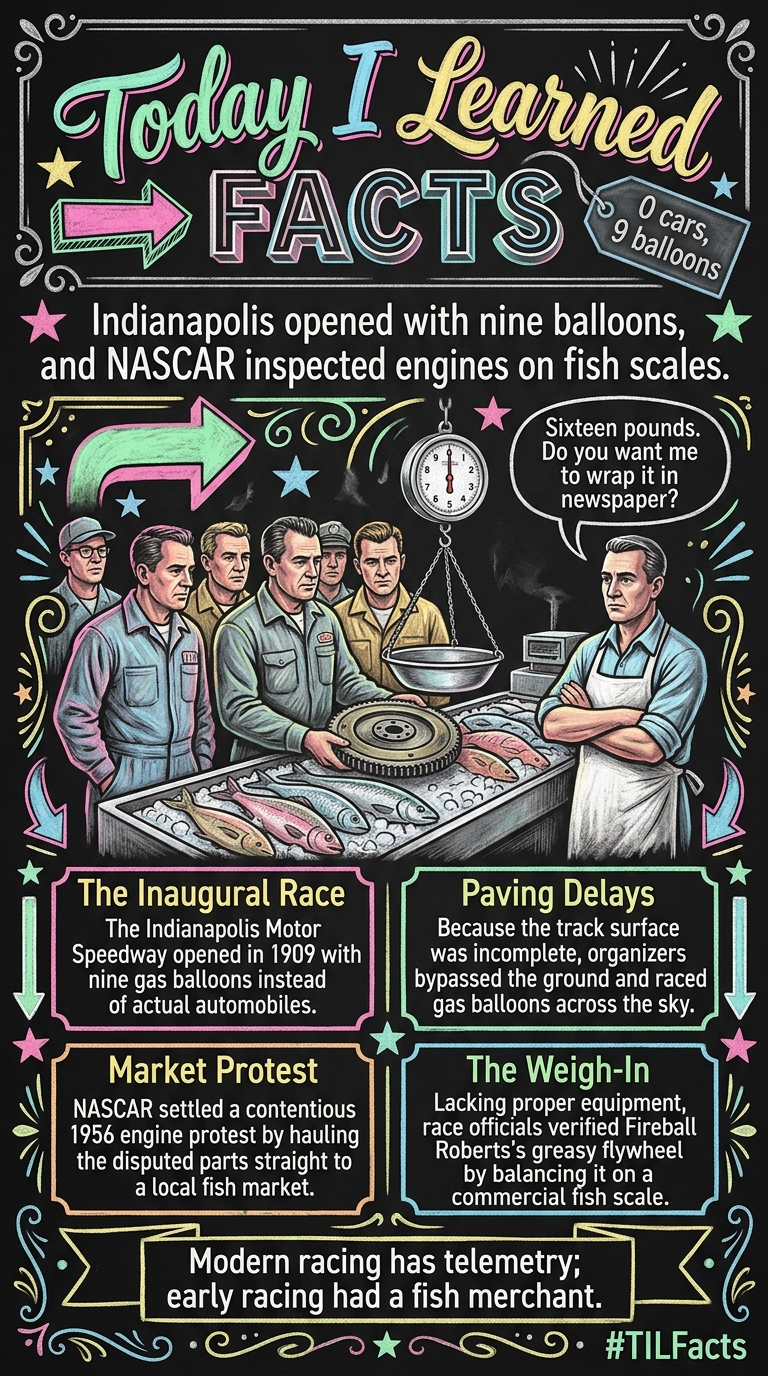
From Hot Air to Fish Scales: How NASCAR & Indy's Weirdest Starts Made Racing History

Before American motorsport engineered every fraction of a second, early racing ran on frantic improvisation. The world's most famous auto racetrack held its very first competition without a single car, opting for nine hot air balloons because the track surface was still unfinished. Decades later, NASCAR settled a contentious engine protest by hauling a winner's greasy flywheel to a local fish market to use their commercial scale. More

In the 1960s, the CIA spent millions on Operation Acoustic Kitty to turn real domestic cats into covert listening devices.

During the 1960s, the CIA launched Project Acoustic Kitty to turn domestic cats into covert mobile wiretaps. Veterinary surgeons embedded microphones in their ear canals, transmitters at the base of their skulls, and wire antennas woven through their fur. The project was scrapped after the CIA realised that cats are fundamentally uninterested in national security. More

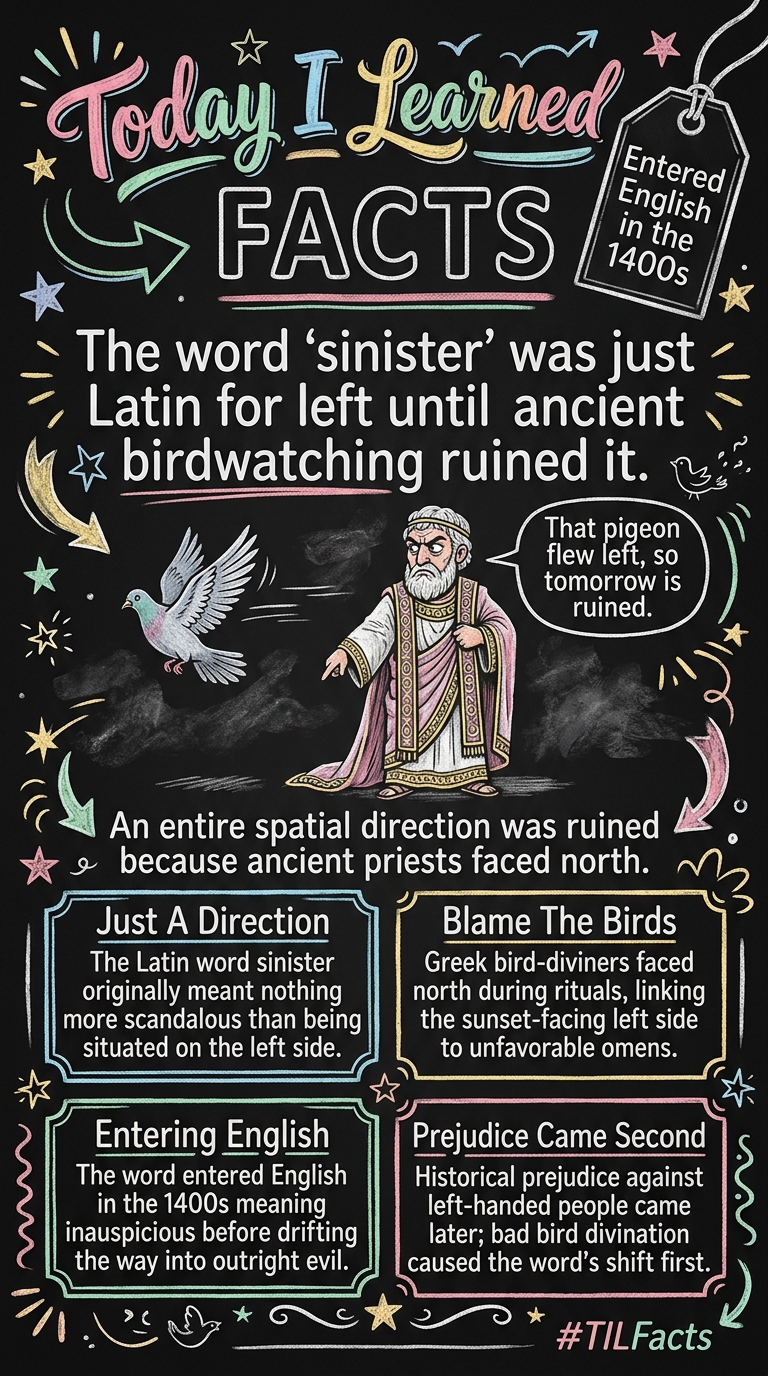
The word 'sinister' originally just meant 'left-handed' in Latin before centuries of superstition turned it into a synonym for evil.

Latin speakers used the word sinister simply to mean on the left side. The jump to malevolence did not come from playground bullying against left-handers, but from Roman and Greek bird watchers doing divination. Because Greek augurs faced north, unfavorable western signs appeared on their left, turning a basic spatial direction into a permanent cosmic curse. More

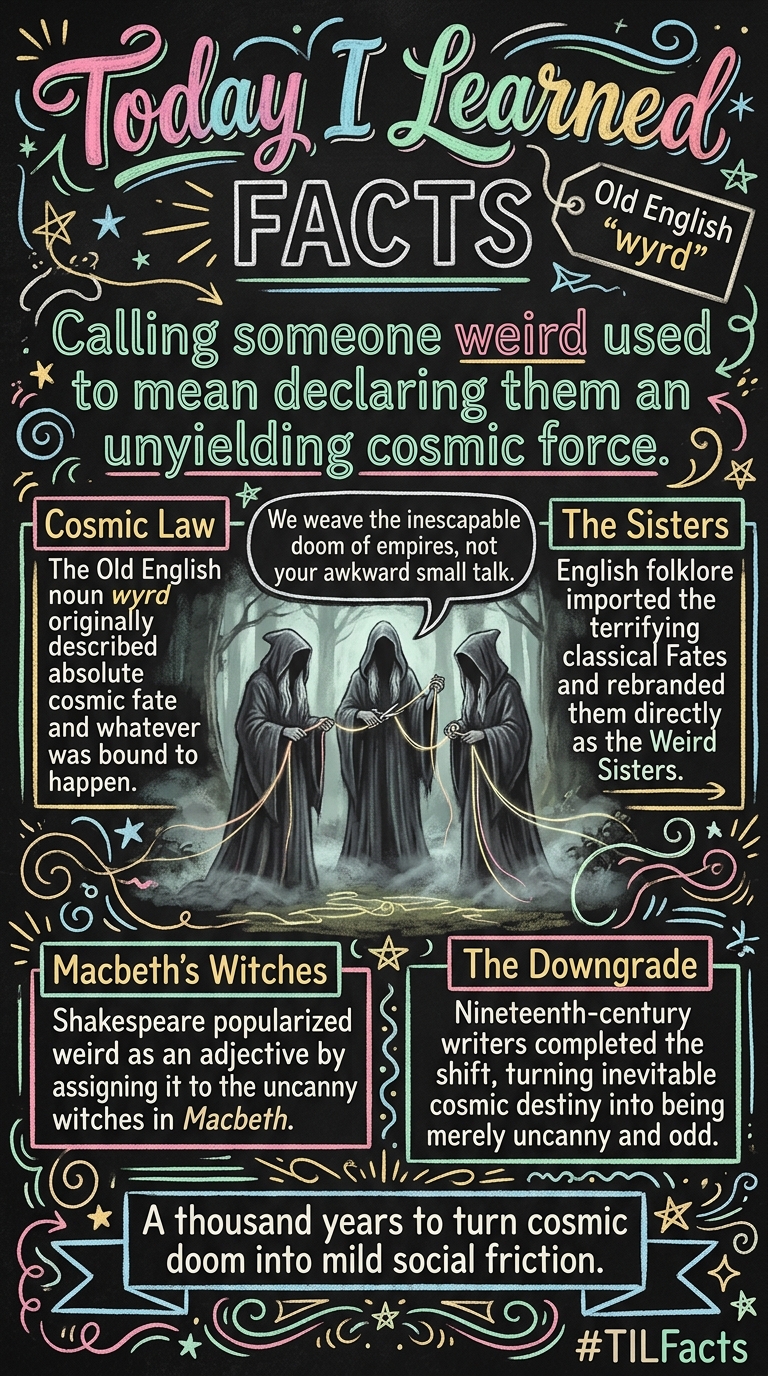
The word weird originally meant fate or destiny. Derived from the Old English wyrd, calling someone weird in ancient times was essentially declaring them to be a powerful, inevitable force of the univ

Calling someone weird used to mean calling them an inevitable cosmic force. The word comes from the Old English noun wyrd, which referred to fate, destiny, or what must come to pass. Shakespeare and later poets helped twist the concept into uncanny sorcery, eventually downgrading a cosmic law into an awkward quirk. More

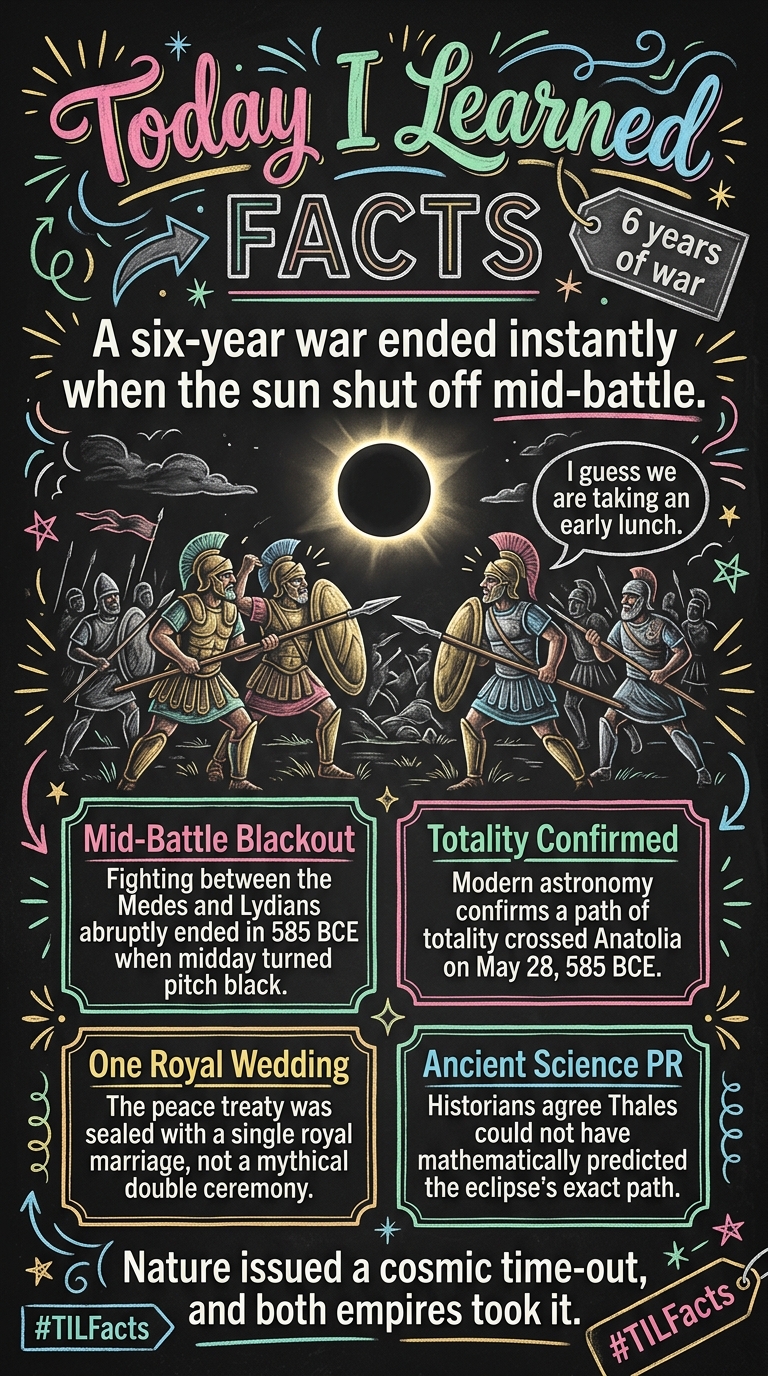
The Solar Eclipse That Ended a 6-Year War on the Spot

In 585 BCE, fighting between the Medes and Lydians ground to an immediate halt when midday turned into complete darkness. Both armies saw the solar eclipse as a direct order from above, dropped their weapons, and brokered peace through a royal marriage. The legend that Thales accurately predicted the exact day was added later by historians giving early science a victory lap. More

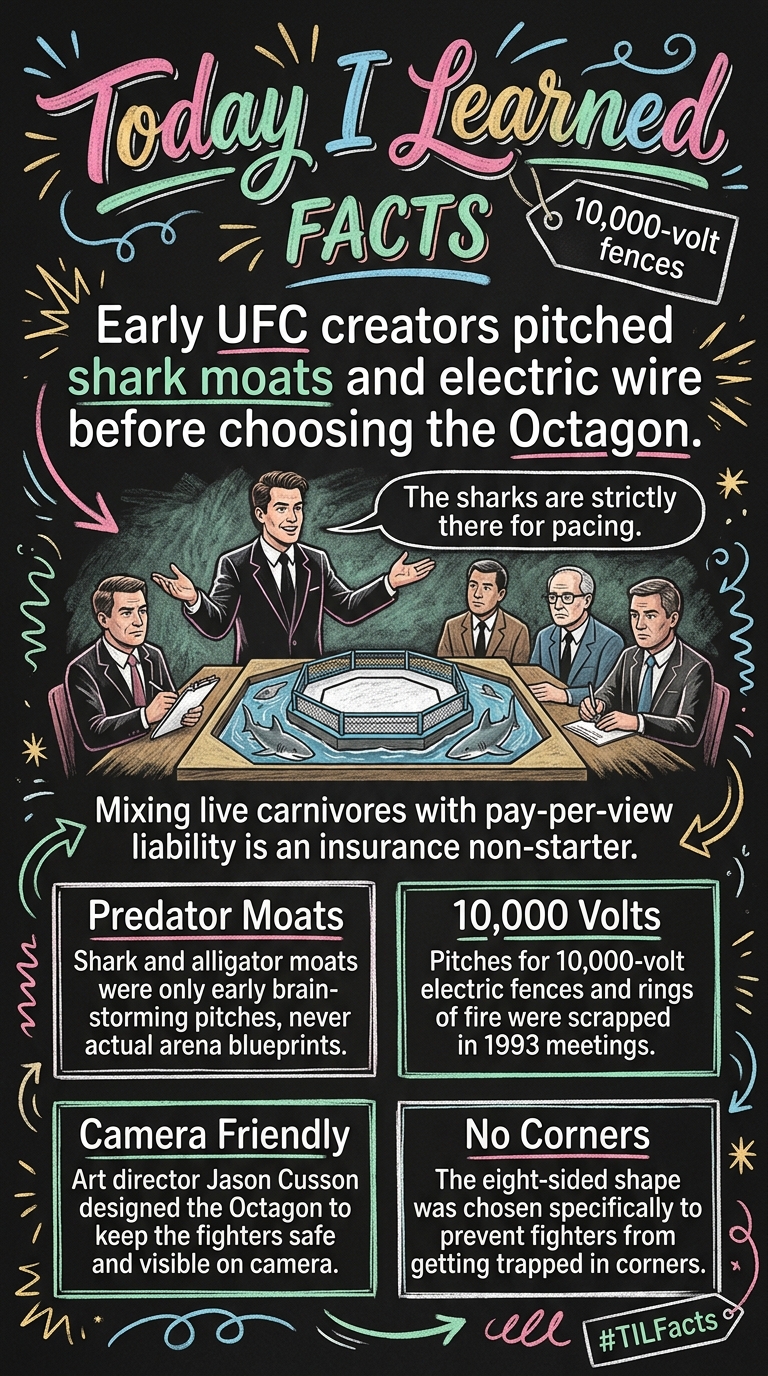
Did UFC Almost Have a Shark Moat? The True Story

Before UFC 1 launched in 1993, its creators genuinely tossed around ideas like electrified wire perimeters, rings of fire, and moats filled with live sharks or alligators. These were Hollywood brainstorming spitballs rather than blueprint drafts, dismissed almost instantly because mixing live carnivores with pay-per-view liability is an insurance non-starter. The production settled on an eight-sided chain-link cage, leaving the man-eating predators entirely in the writers room. More

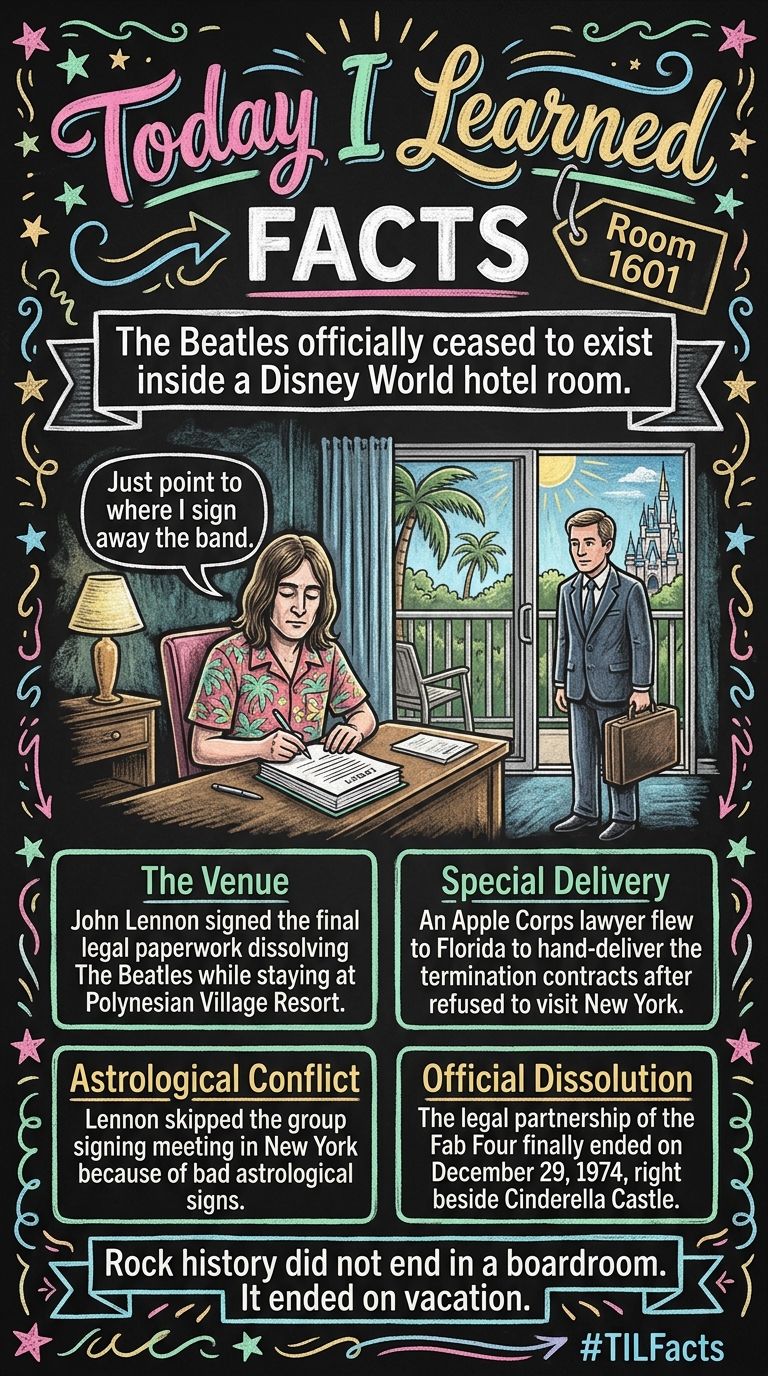
The Beatles officially ceased to exist not in London or New York, but inside room 1601 of Disney's Polynesian Village Resort. In December 1974, while the other members gathered to sign the legal termi

John Lennon signed the final legal document dissolving The Beatles' partnership on December 29, 1974, while staying at Disney's Polynesian Village Resort. An attorney from Apple Corps flew to Florida to deliver the paperwork after Lennon refused to join the other members in New York. Disney lawyers had nothing to do with the contract, but the biggest rock band in history still met its legal end beside Cinderella Castle. More

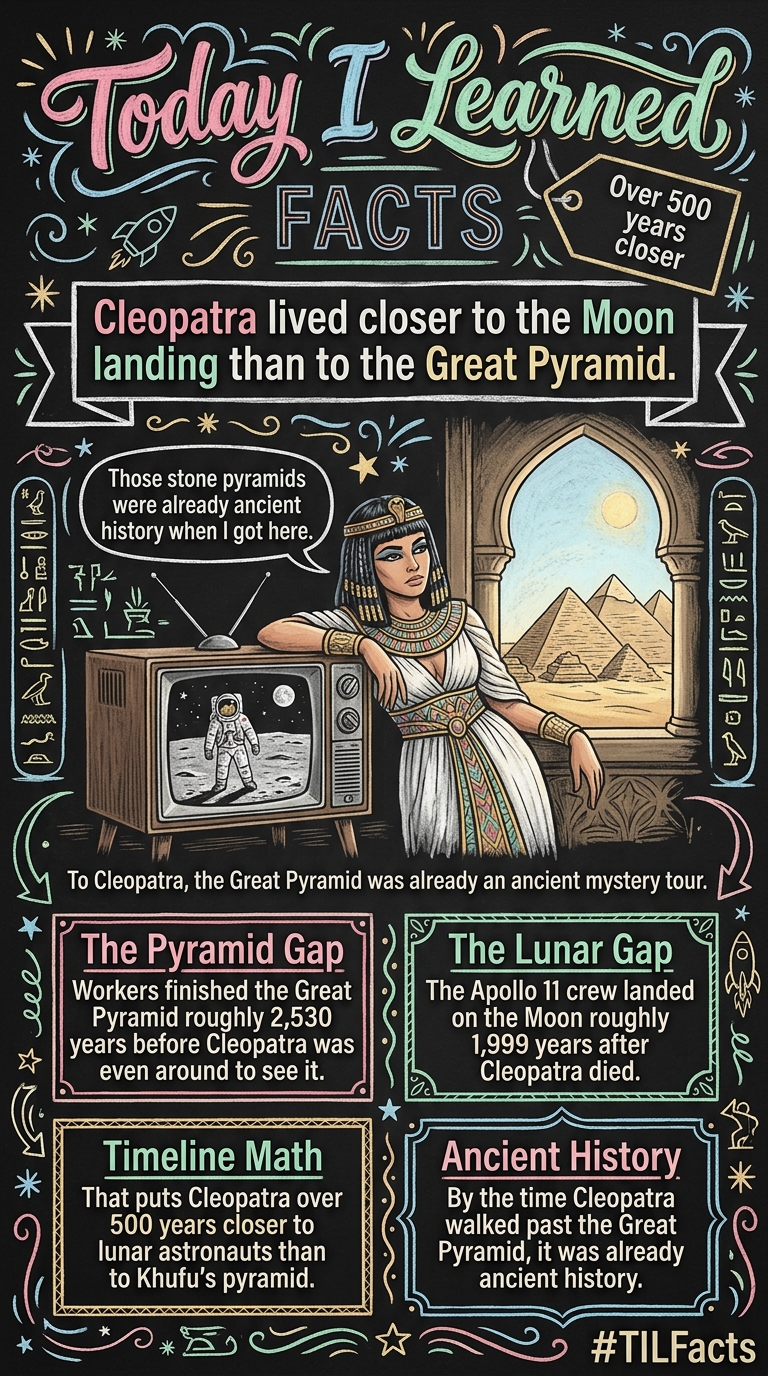
Cleopatra lived closer in time to the 1969 Moon landing than she did to the construction of the Great Pyramid of Giza.

Cleopatra VII ruled Egypt around 30 BCE, roughly 2,500 years after workers finished the Great Pyramid of Giza around 2560 BCE. The Apollo 11 crew touched down on the lunar surface in 1969 CE, approximately 2,000 years after her death. She was centuries closer to watching live television broadcasts of astronauts than to watching her own famous monument go up. More

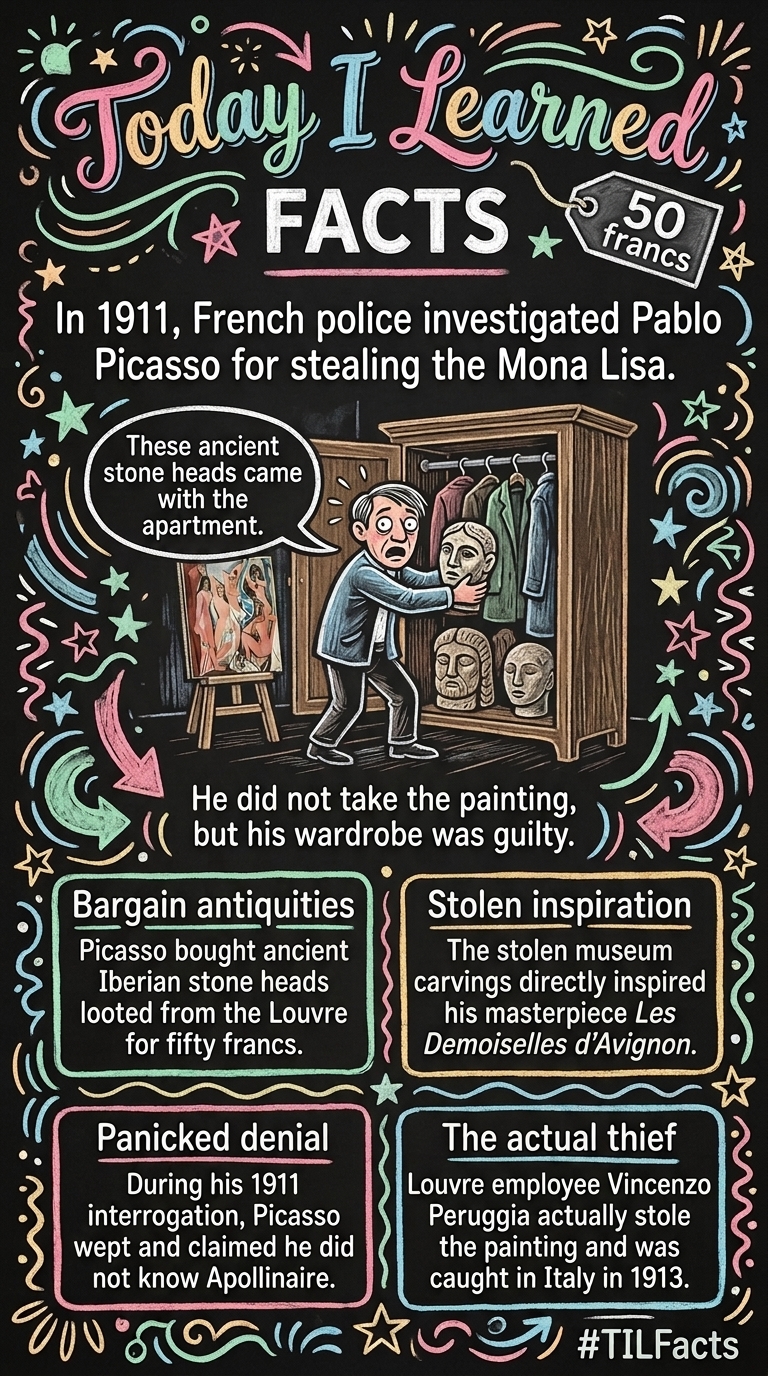
When the Mona Lisa vanished from the Louvre in 1911, French detectives were so baffled that their top suspect was none other than a young Pablo Picasso.

Pablo Picasso was interrogated for the 1911 Mona Lisa theft, but not because French investigators were randomly grasping for leads. A mutual acquaintance had repeatedly looted ancient Iberian stone sculptures straight out of the Louvre and sold them to Picasso for pocket money. When the painting disappeared, the paper trail of Parisian art fencing led a magistrate straight to Picasso's apartment. More

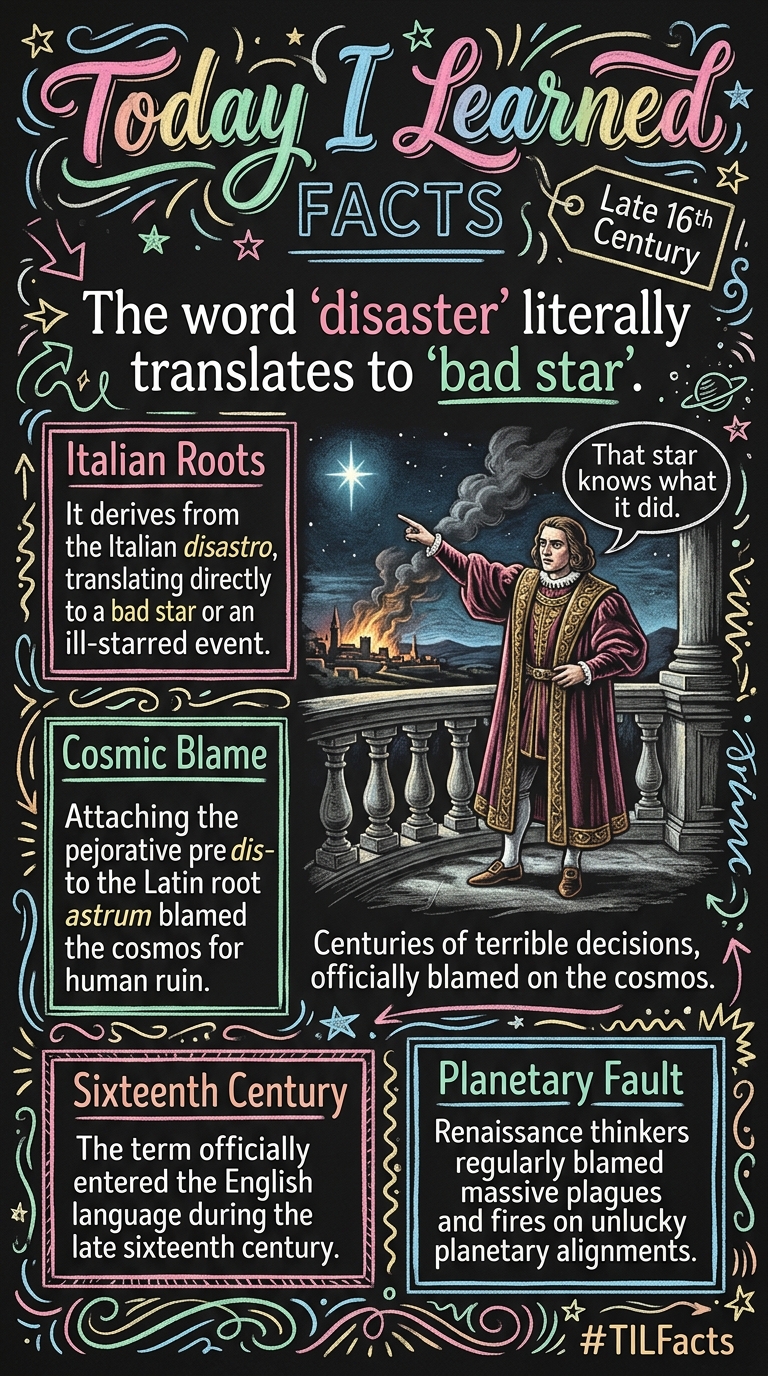
The word disaster literally translates to bad star, originating from the ancient belief that catastrophes were caused by unlucky planetary alignments.

The word disaster comes straight from the Italian disastro, combining the pejorative prefix dis- with astro, meaning star. Renaissance Europe genuinely believed massive calamities were caused by unfortunate celestial alignments and spiteful planetary positions. Every time someone uses the word today, they are casually invoking sixteenth-century astrology. More