TILF

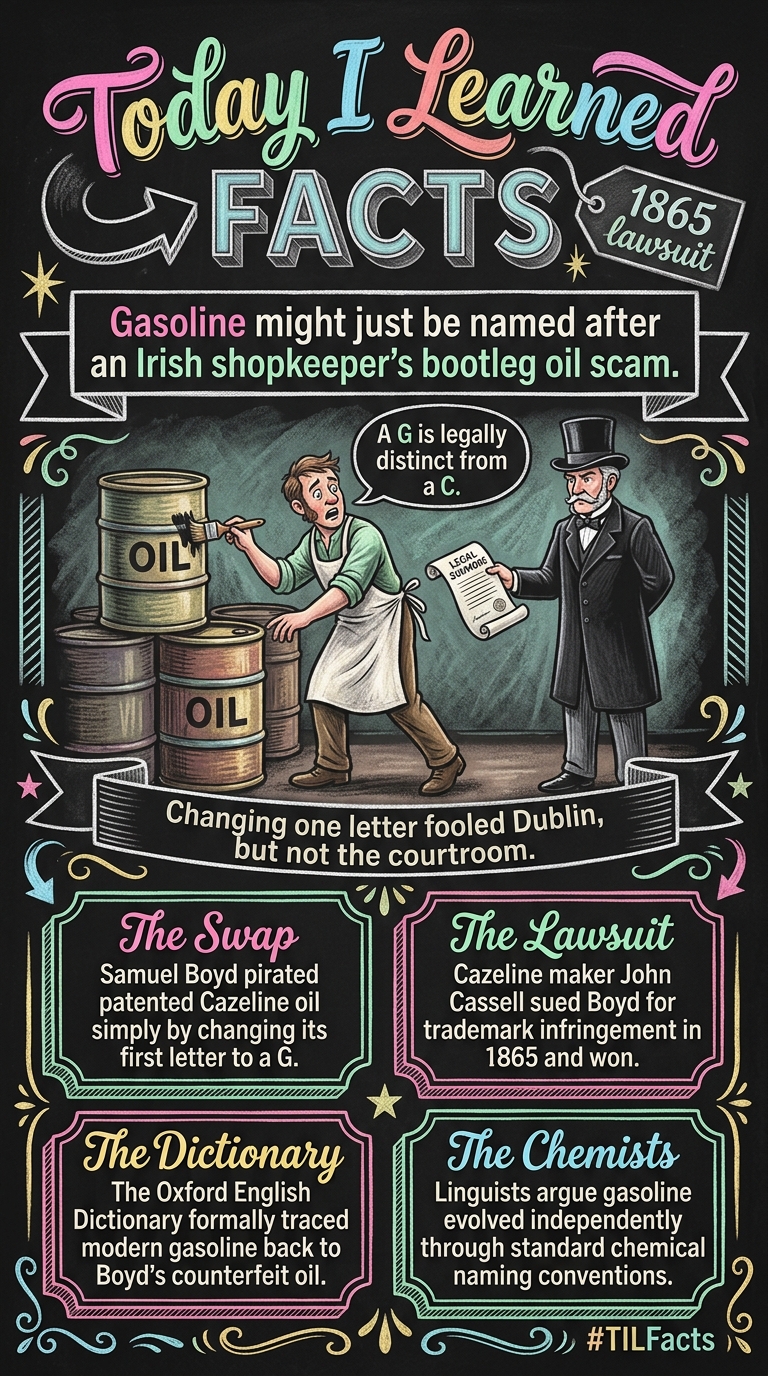
The debate over whether an Irish merchant named gasoline by altering trademarks

Historians dispute whether the word gasoline originated from a Dublin shopkeeper pirating a lamp oil brand. In the 1860s, Samuel Boyd swapped the initial letter of John Cassell's patented oil Cazeline to sell counterfeit Gazeline, prompting an 1865 trademark lawsuit. While the Oxford English Dictionary links gasoline to this scam, linguists show it also evolved independently as a standard scientific coinage. More
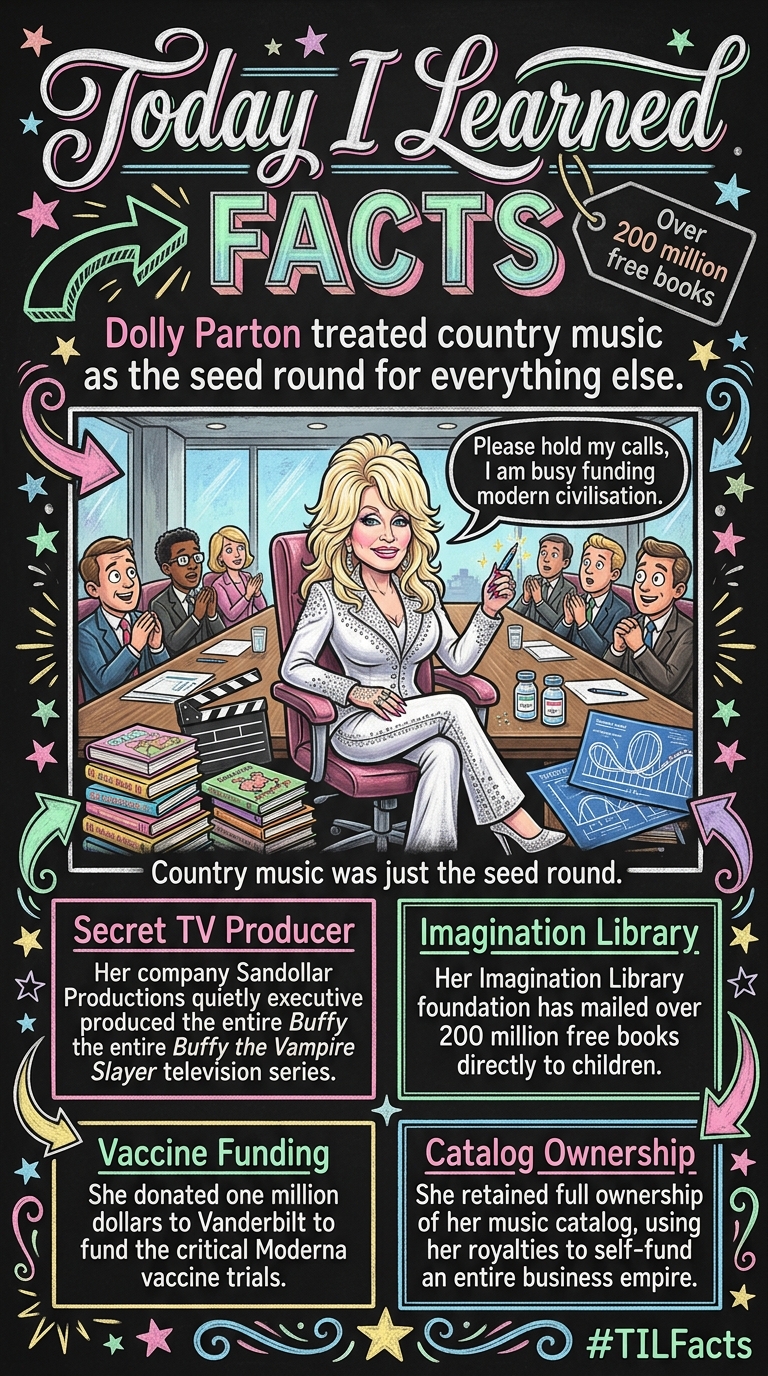
Beyond her legendary music career, Dolly Parton has mailed over 200 million free books to children and helped fund a breakthrough COVID-19 vaccine.

Dolly Parton built an empire that reaches far past country music charts. Beyond writing historic number-one hits, she co-founded Sandollar Productions, which secretly produced Buffy the Vampire Slayer, built the massive Dollywood theme park, mailed over 200 million free books to children, and directly funded critical COVID-19 vaccine research. She did not just cross over into pop culture; she financed it. More

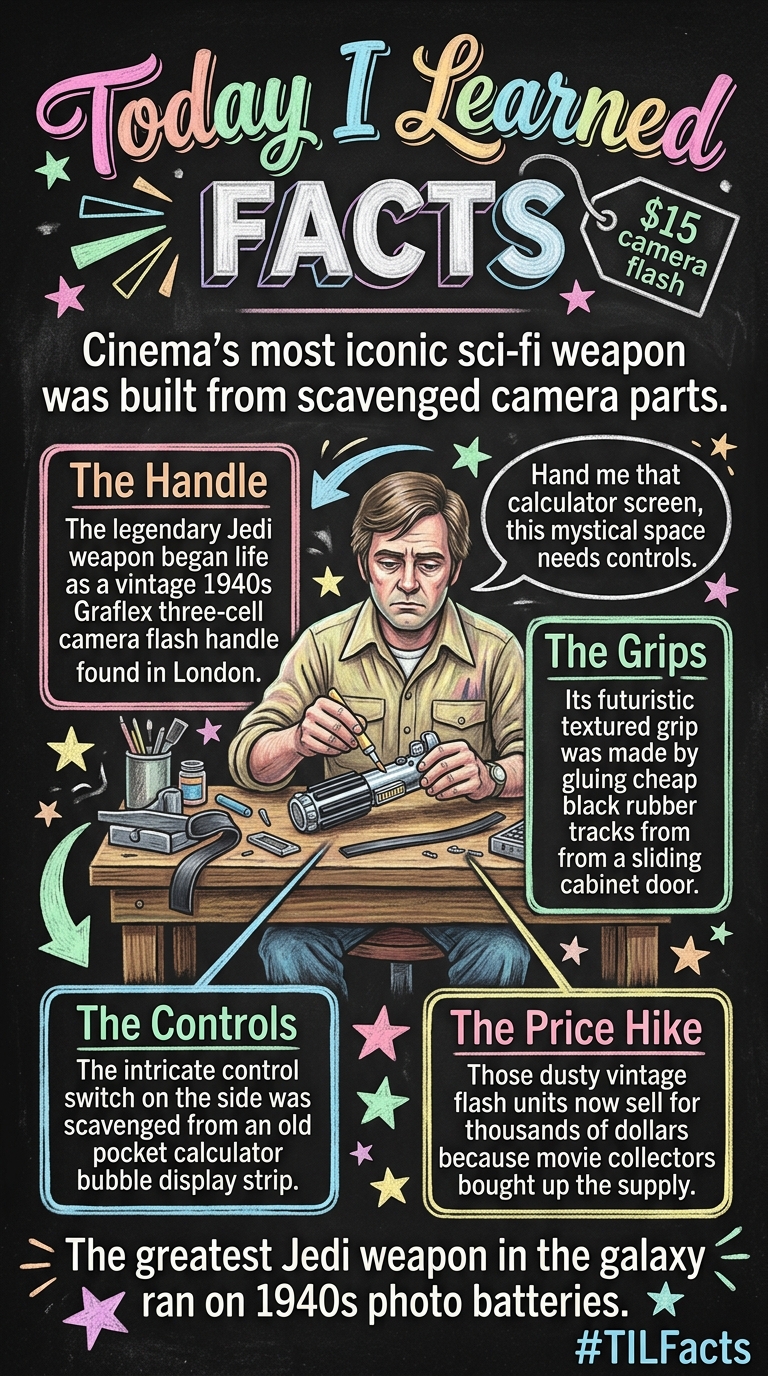
The most iconic weapon in sci-fi history was made from a discarded 1930s camera part bought for just 15 dollars.

Luke Skywalker's original lightsaber was not a custom-machined sci-fi creation. Set decorator Roger Christian built the iconic weapon out of a vintage 1940s Graflex 3-cell camera flash handle he found in a dusty London photography shop. With some black cabinet sliding track glued on for grips and a pocket calculator lens strip, Christian created the most famous sword in cinema for practically zero budget. More

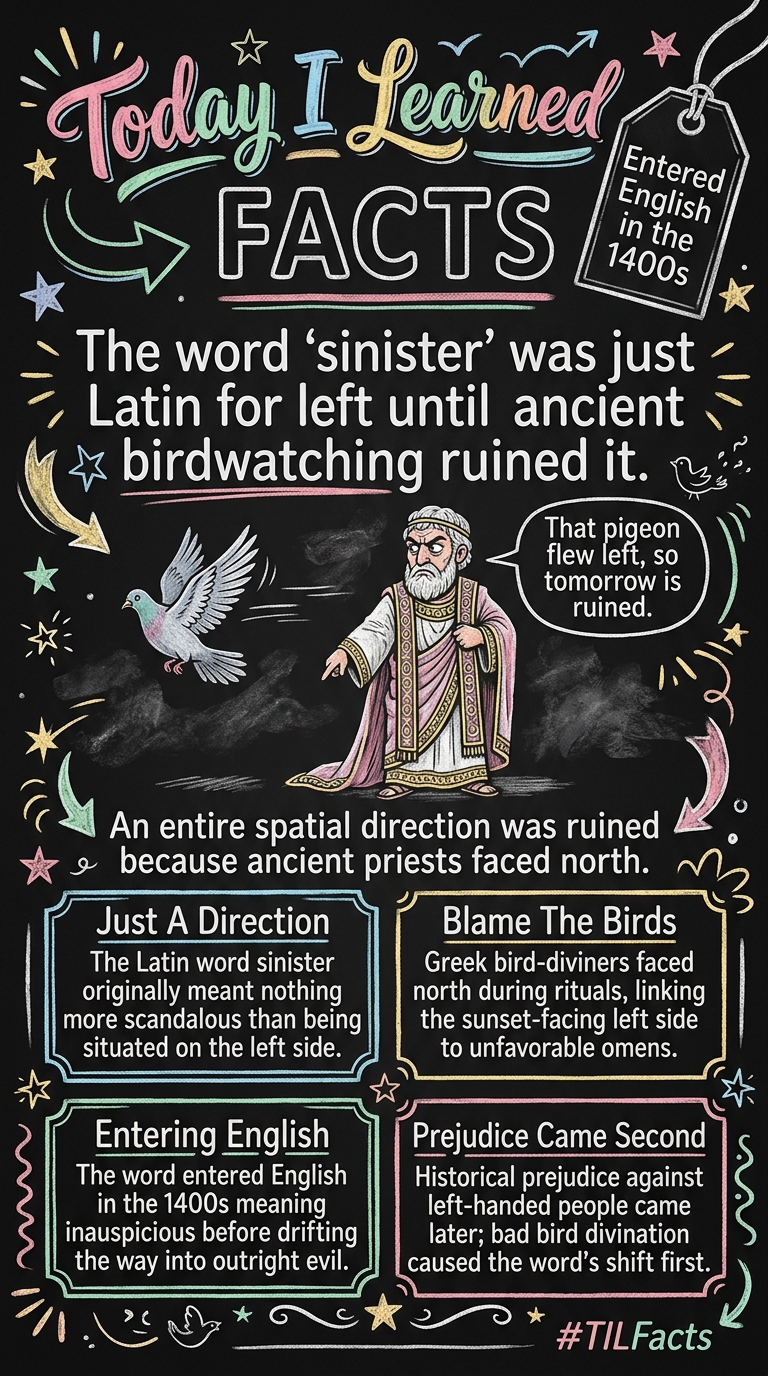
The word 'sinister' originally just meant 'left-handed' in Latin before centuries of superstition turned it into a synonym for evil.

Latin speakers used the word sinister simply to mean on the left side. The jump to malevolence did not come from playground bullying against left-handers, but from Roman and Greek bird watchers doing divination. Because Greek augurs faced north, unfavorable western signs appeared on their left, turning a basic spatial direction into a permanent cosmic curse. More

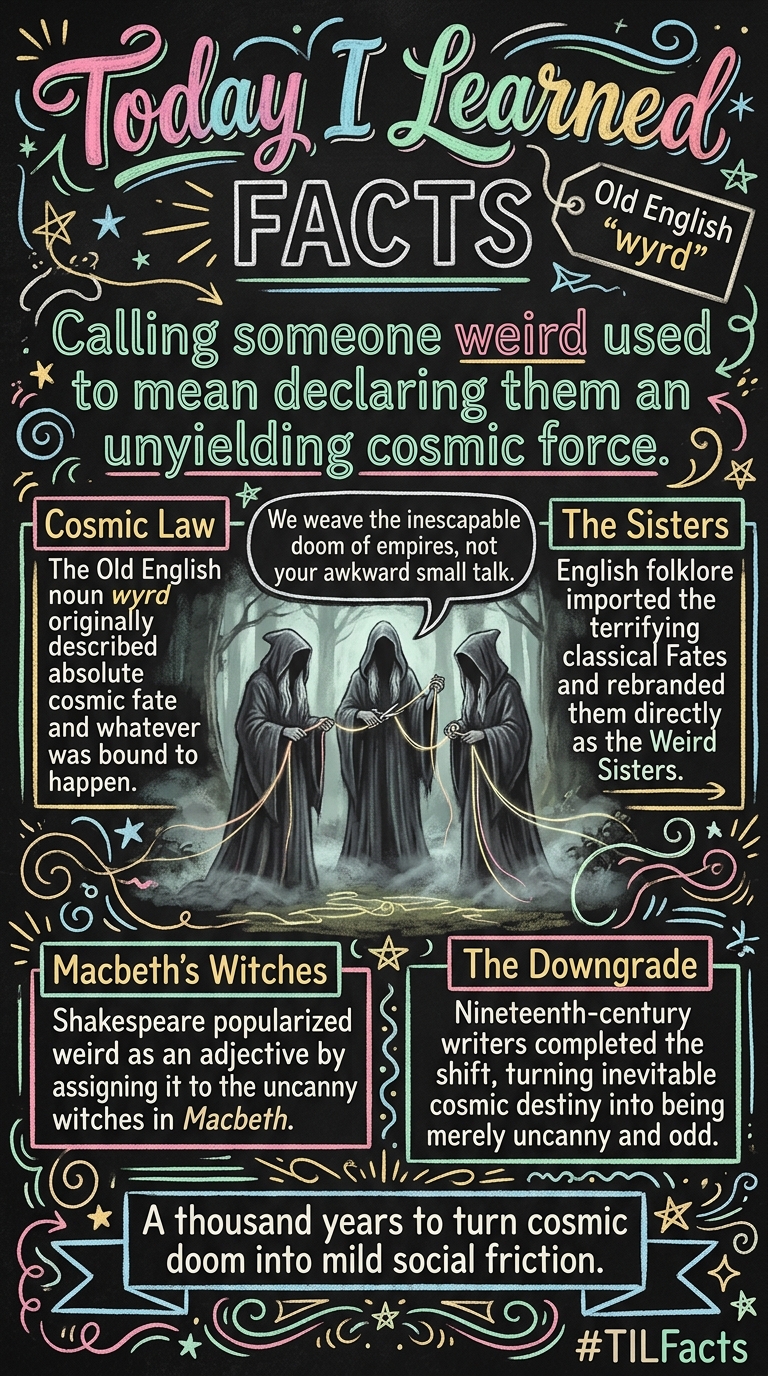
The word weird originally meant fate or destiny. Derived from the Old English wyrd, calling someone weird in ancient times was essentially declaring them to be a powerful, inevitable force of the univ

Calling someone weird used to mean calling them an inevitable cosmic force. The word comes from the Old English noun wyrd, which referred to fate, destiny, or what must come to pass. Shakespeare and later poets helped twist the concept into uncanny sorcery, eventually downgrading a cosmic law into an awkward quirk. More

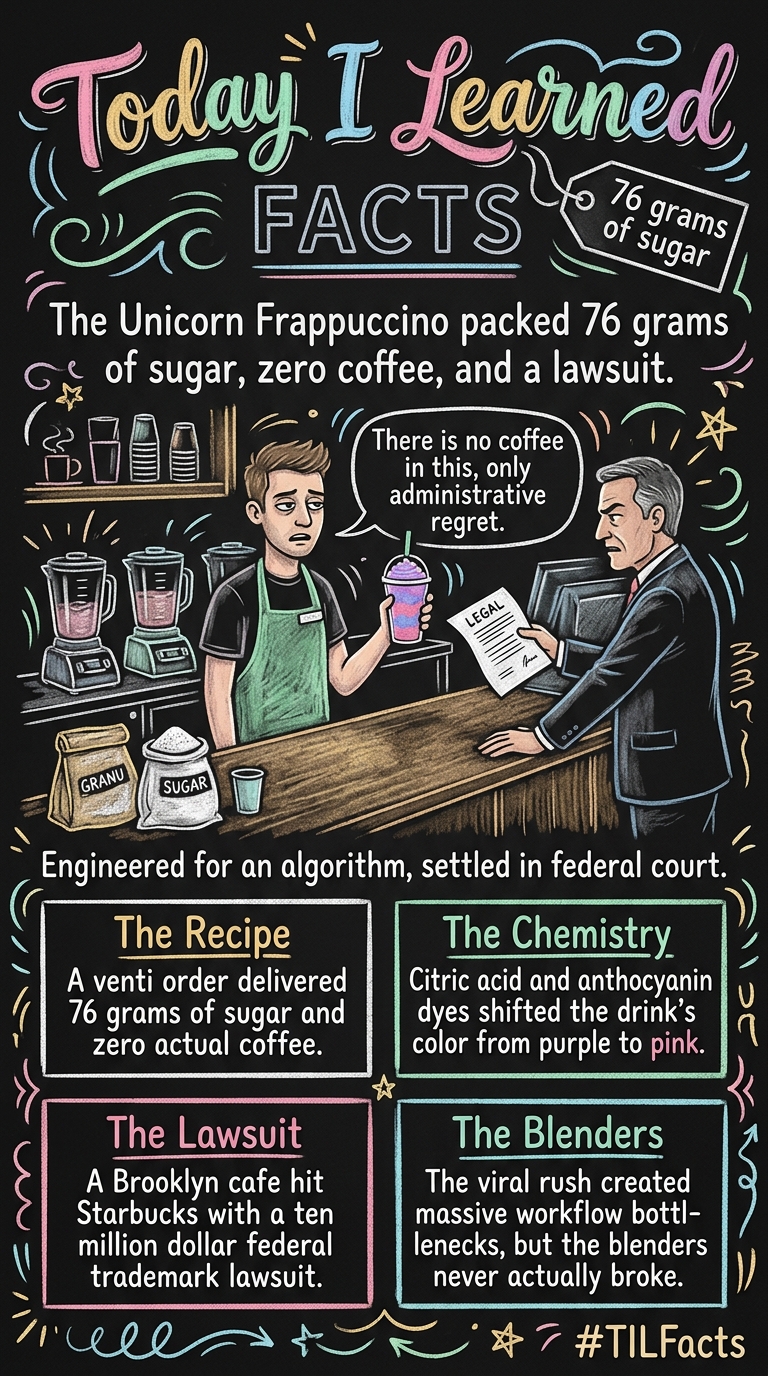
The Unicorn Frappuccino Caused Lawsuits, Barista Chaos, and Zero Coffee

Starbucks designed the 2017 Unicorn Frappuccino with zero coffee, 76 grams of sugar in a venti, and citric acid to shift its color from purple to pink. The viral stunt sparked a 10 million dollar federal trademark lawsuit and an open rebellion from exhausted baristas. The widely repeated claim that it literally broke blending machines is just operational hyperbole from stores overwhelmed by blender bottlenecks. More

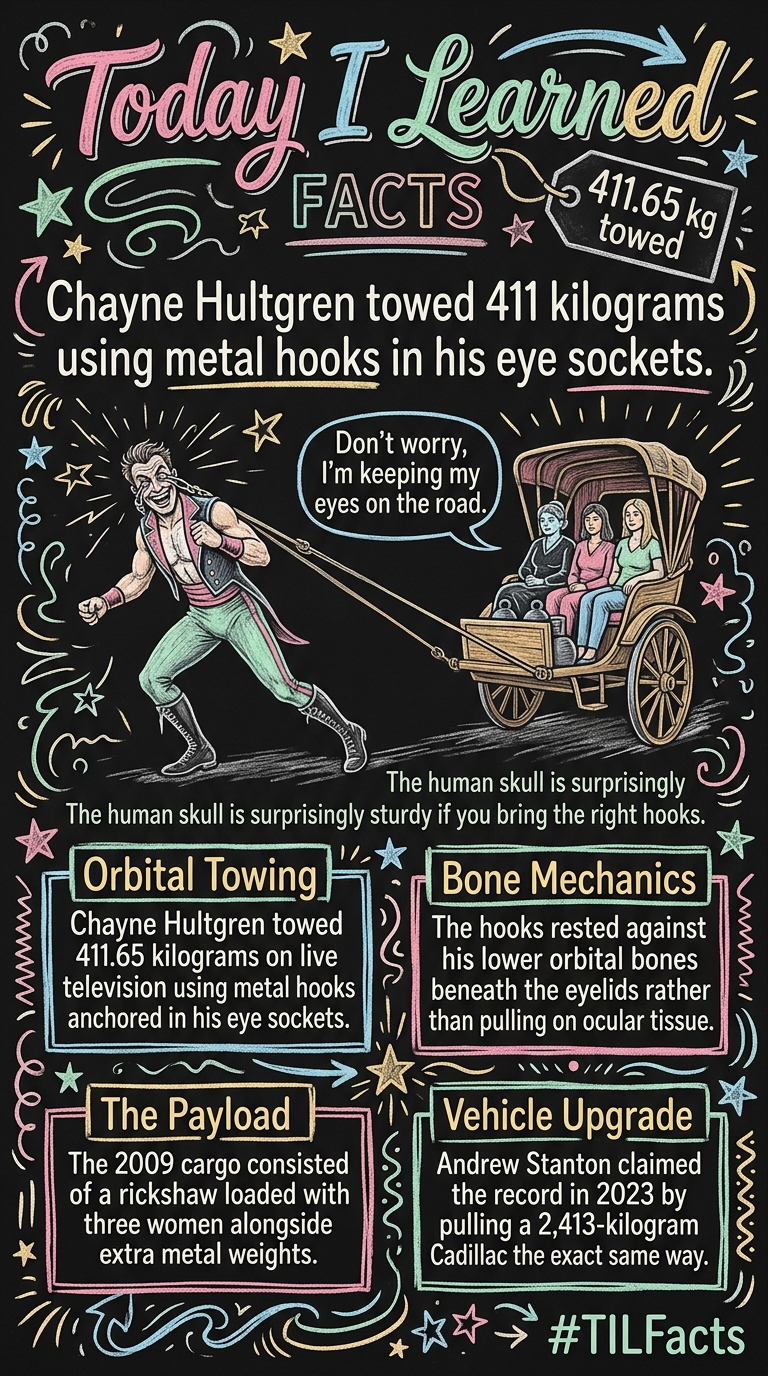
World-renowned sideshow performer 'The Space Cowboy' earned a jaw-dropping Guinness World Record by pulling a 907-pound rickshaw using only specialized hooks secured to his eye sockets.

Australian sideshow performer Chayne Hultgren hooked metal clasps into his lower orbital bones to drag 411.65 kilograms of rickshaw, passengers, and weights. He set the eye-socket pulling world record in 2009 by distributing the mechanical strain directly across the lacrimal bones beneath his eyelids. The feat stood unchallenged for over a decade until another performer dragged an entire Cadillac the same way. More

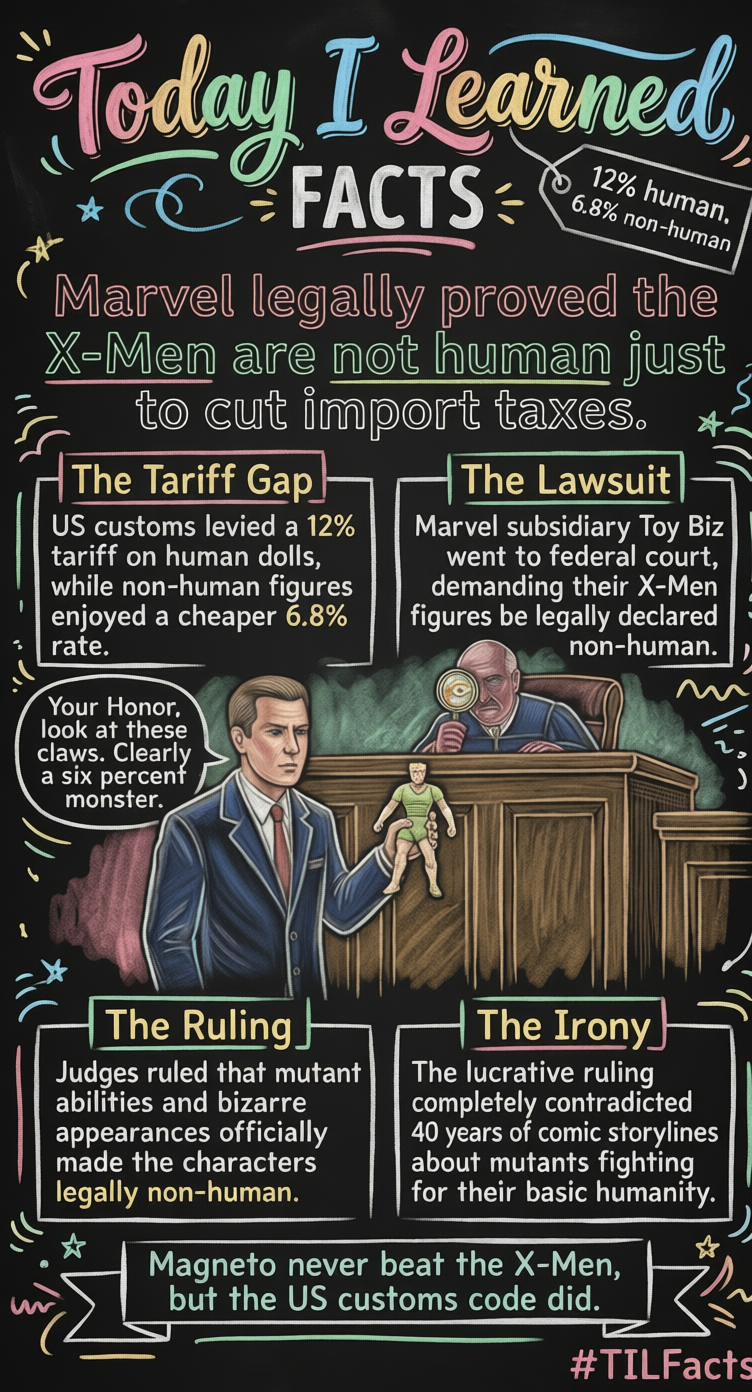
Marvel saved millions on import taxes by legally convincing a federal court that the X-Men are not human.

To avoid a steep import tax on human dolls, Marvel went to federal court and argued their mutant heroes are non-human monsters. The US tariff schedule taxed human figures at 12% while non-human toys were taxed at 6.8%. Marvel's toy division successfully convinced a judge that X-Men characters possessed non-human traits, cutting their tax bill nearly in half. More

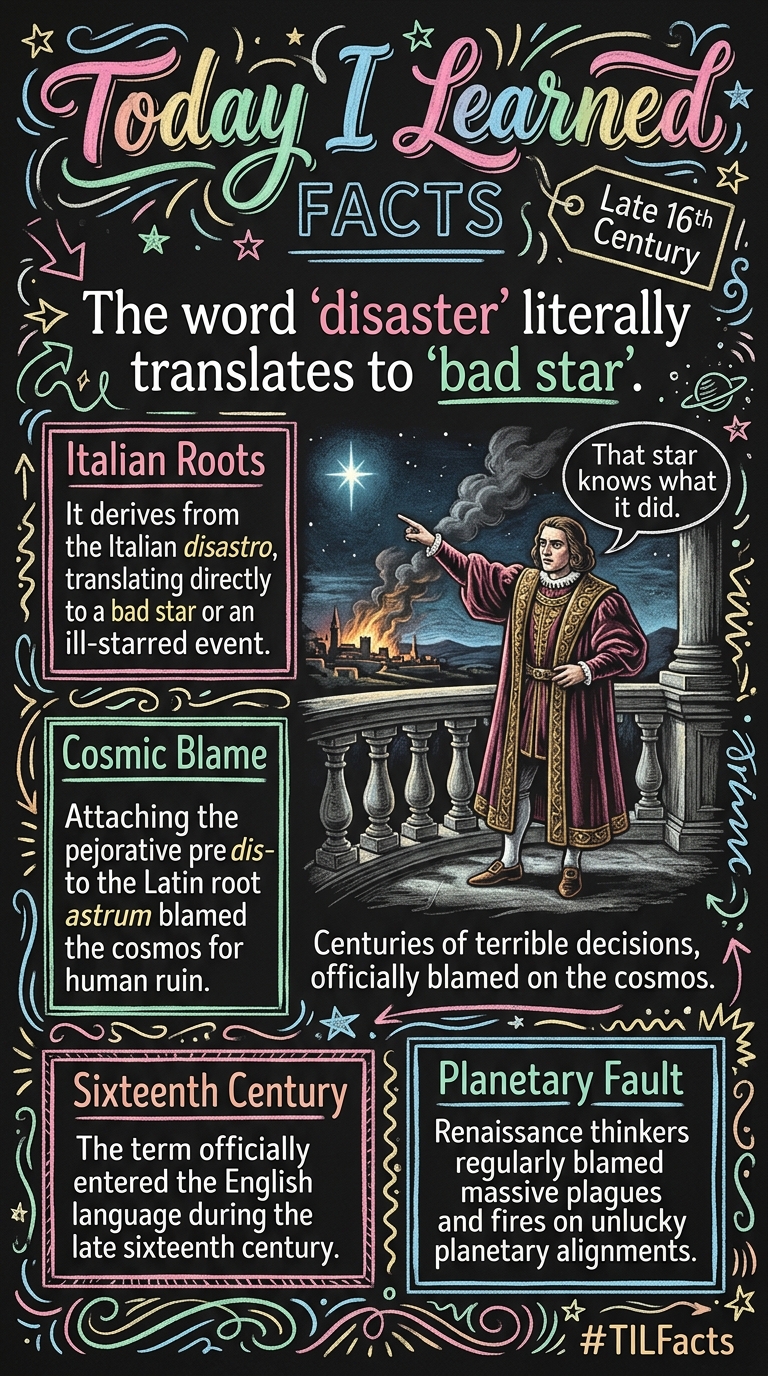
The word disaster literally translates to bad star, originating from the ancient belief that catastrophes were caused by unlucky planetary alignments.

The word disaster comes straight from the Italian disastro, combining the pejorative prefix dis- with astro, meaning star. Renaissance Europe genuinely believed massive calamities were caused by unfortunate celestial alignments and spiteful planetary positions. Every time someone uses the word today, they are casually invoking sixteenth-century astrology. More