 Submit a TILF
The Unicorn Frappuccino Caused Lawsuits, Barista Chaos, and Zero Coffee
Credible sources disagree on this claim; both sides are presented below.
Engineered purely for visual algorithms with zero coffee and 76 grams of sugar, the Unicorn Frappuccino used simple citric-acid chemistry to trigger a color-and-flavor shift that sparked a $10 million federal lawsuit, broke store blenders, and drove exhausted baristas to a viral revolt.
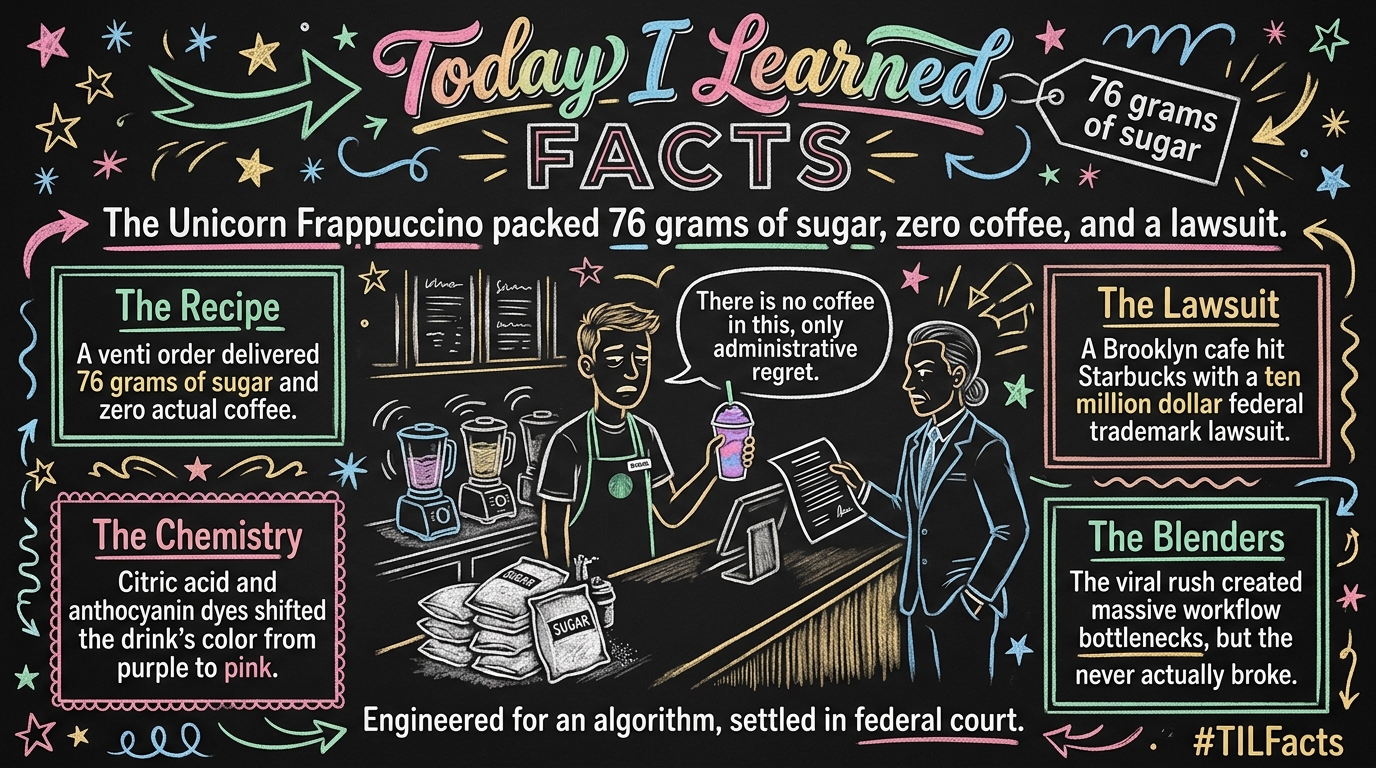
Starbucks designed the 2017 Unicorn Frappuccino with zero coffee, 76 grams of sugar in a venti, and citric acid to shift its color from purple to pink. The viral stunt sparked a 10 million dollar federal trademark lawsuit and an open rebellion from exhausted baristas. The widely repeated claim that it literally broke blending machines is just operational hyperbole from stores overwhelmed by blender bottlenecks.
Key Highlights
- 1A venti Unicorn Frappuccino packed 76 grams of sugar and zero coffee.
- 2Citric acid and anthocyanin dyes shifted the drink from purple to pink.
- 3A Brooklyn cafe hit Starbucks with a 10 million dollar trademark lawsuit.
- 4The drink bottlenecked store workflows but did not break the blenders.
The Deep Dive
In April 2017, Starbucks unveiled a limited-edition beverage engineered specifically to dominate Instagram feeds. The Unicorn Frappuccino contained no brewed coffee or espresso, operating entirely as a vehicle for neon food dyes and 76 grams of sugar in its 24-ounce venti format. Customers lined up in droves to photograph the product before drinking it, turning standard retail counters into assembly lines for viral media.
The drink's signature trick was a dual visual and flavor transformation driven by basic kitchen chemistry. Food scientists combined anthocyanin pigments with a dose of citric acid tucked inside a bright blue drizzle. Stirring the beverage shifted its internal pH balance, causing the purple base to turn pink while flipping the flavor profile from overwhelmingly sweet to sharply sour.
Legal trouble arrived almost immediately from Brooklyn, where a cafe named The End had already developed an herbal beverage called the Unicorn Latte. The cafe's parent company filed a 10 million dollar federal trademark infringement lawsuit against Starbucks in May 2017. Both parties eventually resolved the dispute outside the courtroom with an undisclosed settlement.
The intense five-day run triggered a viral revolt among retail staff, with workers posting desperate public videos begging customers to stop ordering it. However, the legendary claim that the drink mechanically destroyed blending machines is false. While the nonstop preparation created massive operational bottlenecks and blender shortages behind the counter, it did not cause widespread physical equipment failure.
The episode proved that modern beverage development could succeed entirely on algorithmic appeal rather than taste or function. Starbucks demonstrated that a coffeehouse chain could generate historic customer traffic without selling coffee, provided the substitute is bright enough to photograph. The stunt established a blueprint for viral food marketing that prioritizes shareability over operational reality.
Correction history
- August 20, 2026 — amended(Edited through the draft pipeline.)
Discussion
No comments yet. Be the first to share what you found surprising.