
TILF

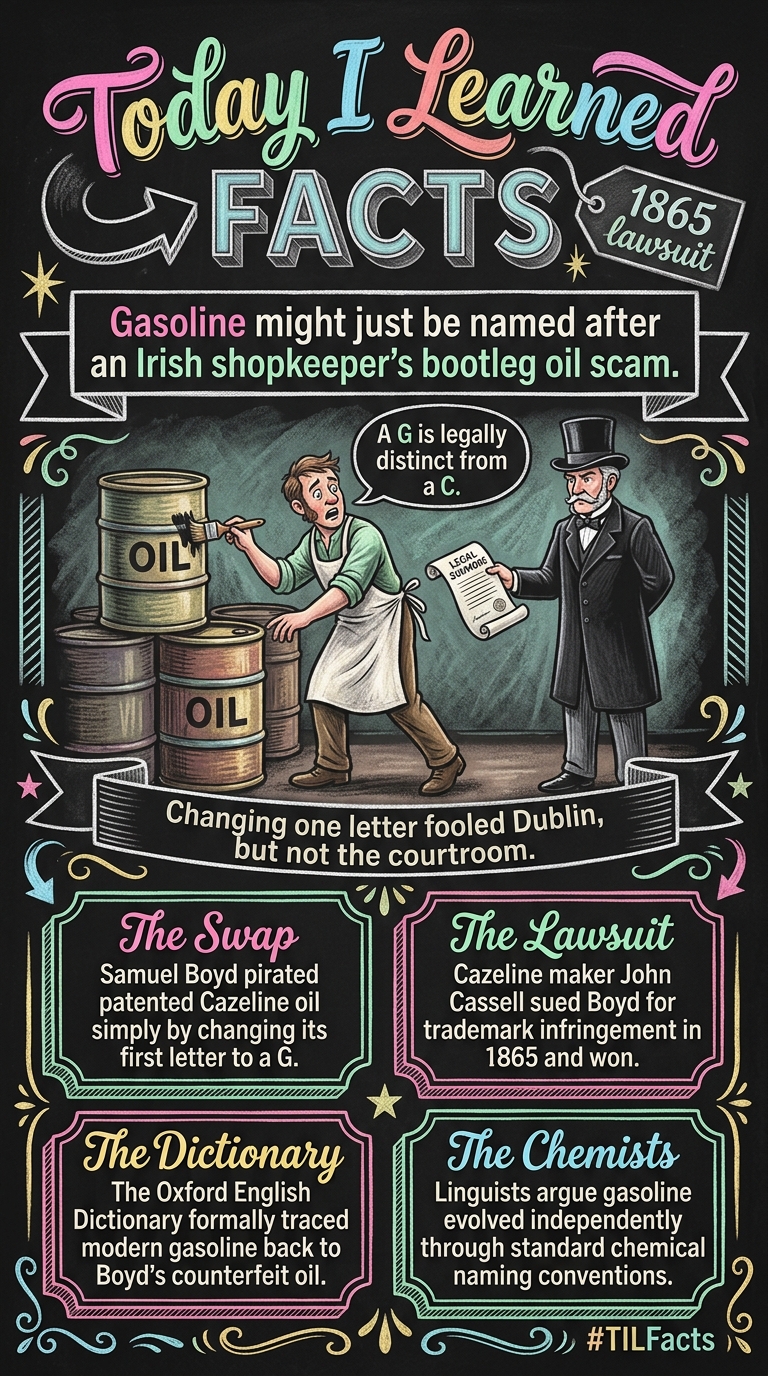
The debate over whether an Irish merchant named gasoline by altering trademarks

Historians dispute whether the word gasoline originated from a Dublin shopkeeper pirating a lamp oil brand. In the 1860s, Samuel Boyd swapped the initial letter of John Cassell's patented oil Cazeline to sell counterfeit Gazeline, prompting an 1865 trademark lawsuit. While the Oxford English Dictionary links gasoline to this scam, linguists show it also evolved independently as a standard scientific coinage. More
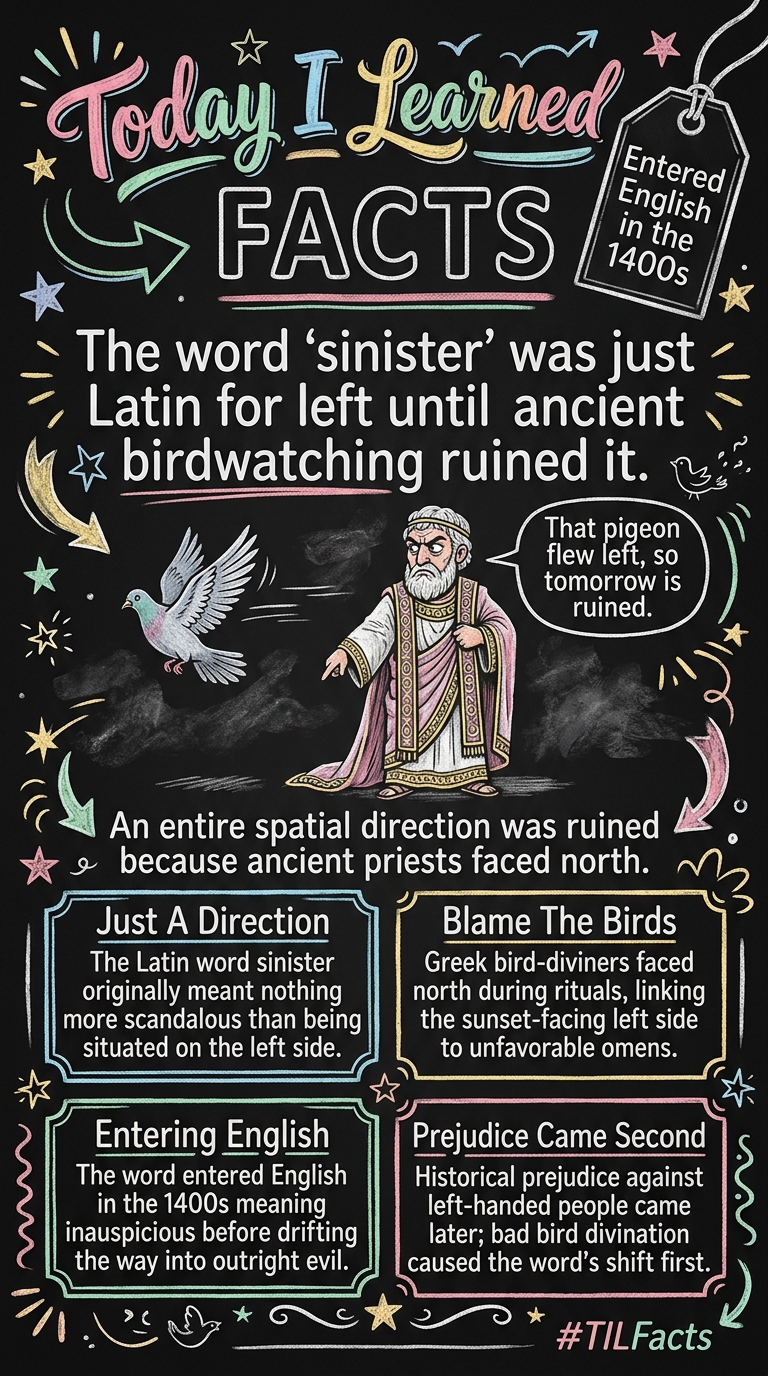
The word 'sinister' originally just meant 'left-handed' in Latin before centuries of superstition turned it into a synonym for evil.

Latin speakers used the word sinister simply to mean on the left side. The jump to malevolence did not come from playground bullying against left-handers, but from Roman and Greek bird watchers doing divination. Because Greek augurs faced north, unfavorable western signs appeared on their left, turning a basic spatial direction into a permanent cosmic curse. More

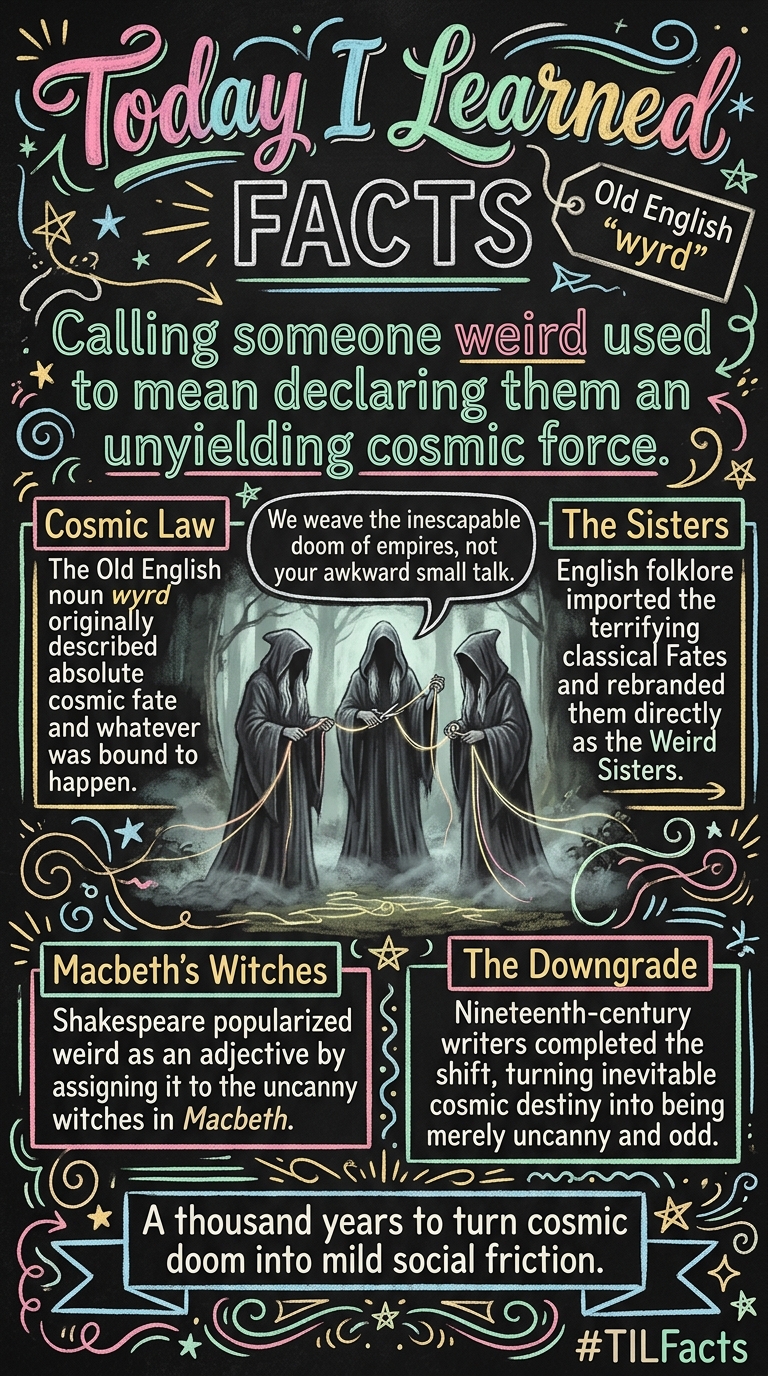
The word weird originally meant fate or destiny. Derived from the Old English wyrd, calling someone weird in ancient times was essentially declaring them to be a powerful, inevitable force of the univ

Calling someone weird used to mean calling them an inevitable cosmic force. The word comes from the Old English noun wyrd, which referred to fate, destiny, or what must come to pass. Shakespeare and later poets helped twist the concept into uncanny sorcery, eventually downgrading a cosmic law into an awkward quirk. More

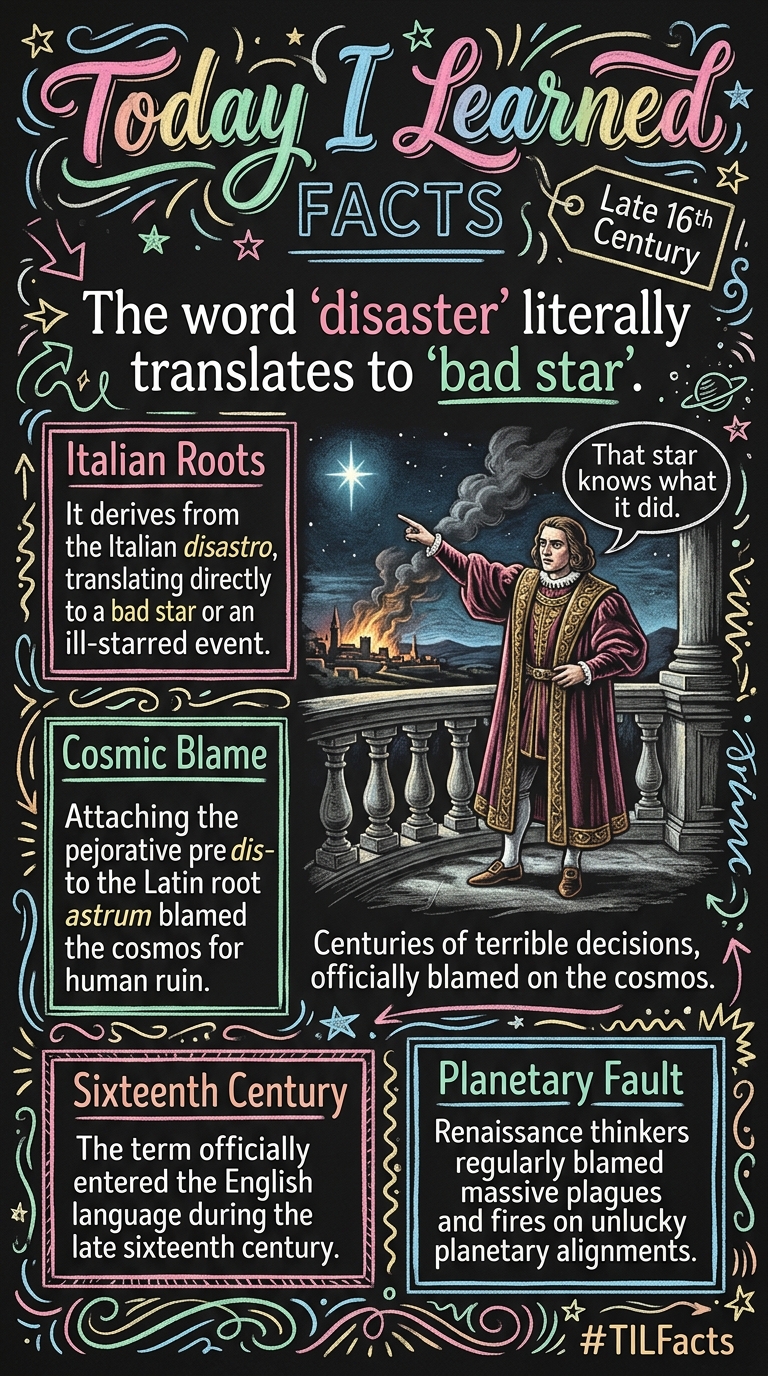
The word disaster literally translates to bad star, originating from the ancient belief that catastrophes were caused by unlucky planetary alignments.

The word disaster comes straight from the Italian disastro, combining the pejorative prefix dis- with astro, meaning star. Renaissance Europe genuinely believed massive calamities were caused by unfortunate celestial alignments and spiteful planetary positions. Every time someone uses the word today, they are casually invoking sixteenth-century astrology. More