
 Submit a TILF
The Myth That Casinos Use Purple Chips to Trick You Into Spending More
This is not true. The sources below show why, and the article explains what is actually the case.
The Secret Reason Casinos Use Purple Chips To Influence Human Behavior
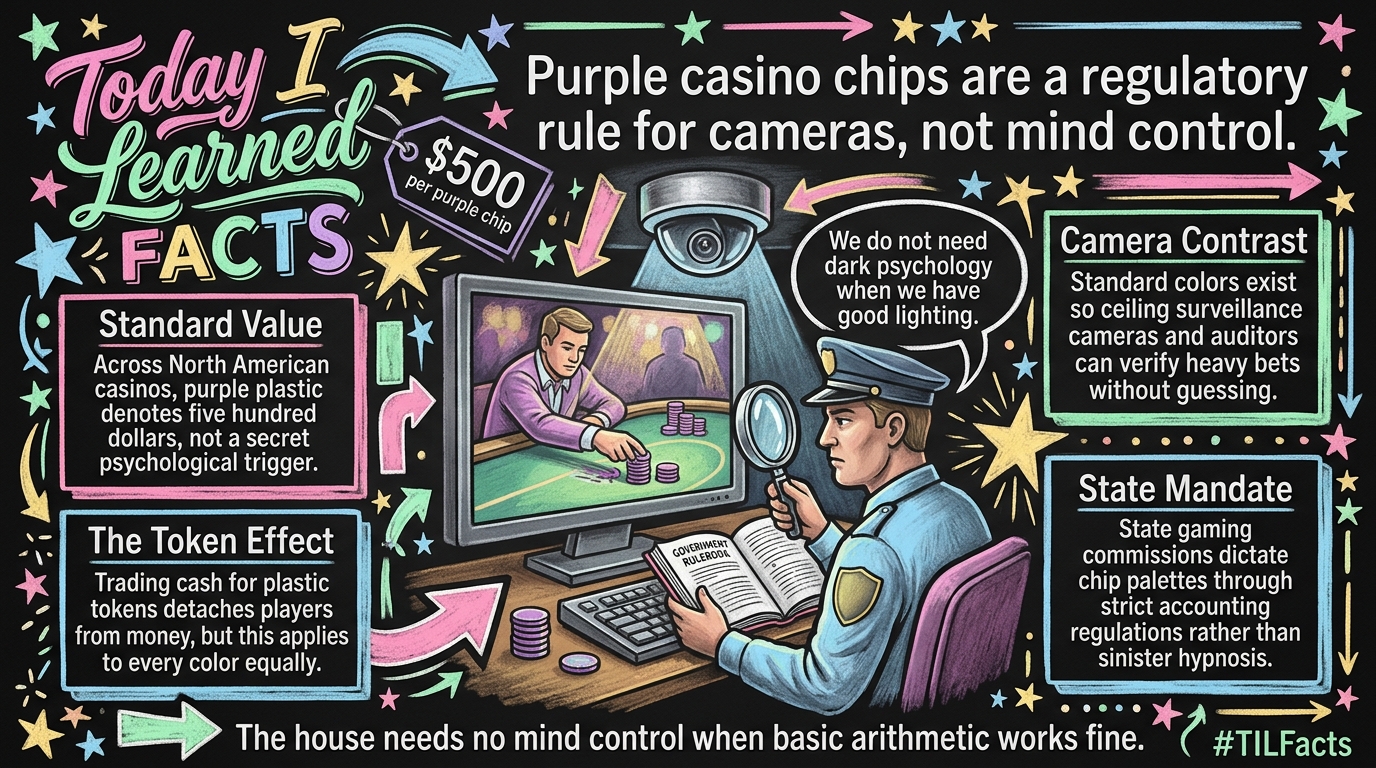
Viral claims assert casinos use purple chips as psychological mind-control tools. In reality, purple is simply the standard regulatory color for 500-dollar chips so surveillance cameras can spot high bets easily. While abstract plastic chips detach gamblers from cash, the purple hue is an accounting rule, not dark psychology.
Key Highlights
- 1Purple chips standardly denote 500 dollars across North American casinos.
- 2Color standards exist for surveillance visibility and accounting accuracy.
- 3The token effect detaches players from money across all chip colors equally.
- 4State gaming commissions mandate chip colors, not sinister hypnotists.
The Deep Dive
Online clickbait loves claiming casinos chose purple chips through sinister psychological research to make high rollers spend recklessly. The theory sounds deliciously devious: an elite shade weaponised to trick human brains into shedding caution. The truth is vastly more mundane and heavily audited by state regulators.
Purple represents five hundred dollars across North American cardrooms because overhead security cameras need to tell denominations apart from twenty feet up. Gaming commissions mandate standardised color hierarchies so pit bosses, dealers, and surveillance operators can spot table errors, miscounted pots, and theft at a single glance.
Casinos definitely exploit human psychology, but they do it with plastic in general, not special pigments. Behavioral economists document the classic token effect: swapping physical greenbacks for smooth discs detaches the brain from the sting of parting with hard-earned wealth. That emotional disconnect applies equally whether a disc is white, red, green, black, or purple.
Players routinely nickname five-hundred-dollar chips 'Barneys' after the purple dinosaur rather than any hypnotic corporate sorcery. If purple chips held a secret hypnotic sway over human risk perception, regulators would have banned them decades ago alongside rigged dice and marked card decks.
High-limit tables rely on uniform palettes because clarity prevents chaotic disputes, not because violet lightwaves short-circuit human reason. The house always wins because the mathematical odds favor the table, leaving zero necessity for secret psychological paint formulas.
Sources
Discussion
No comments yet. Be the first to share what you found surprising.