
 Submit a TILF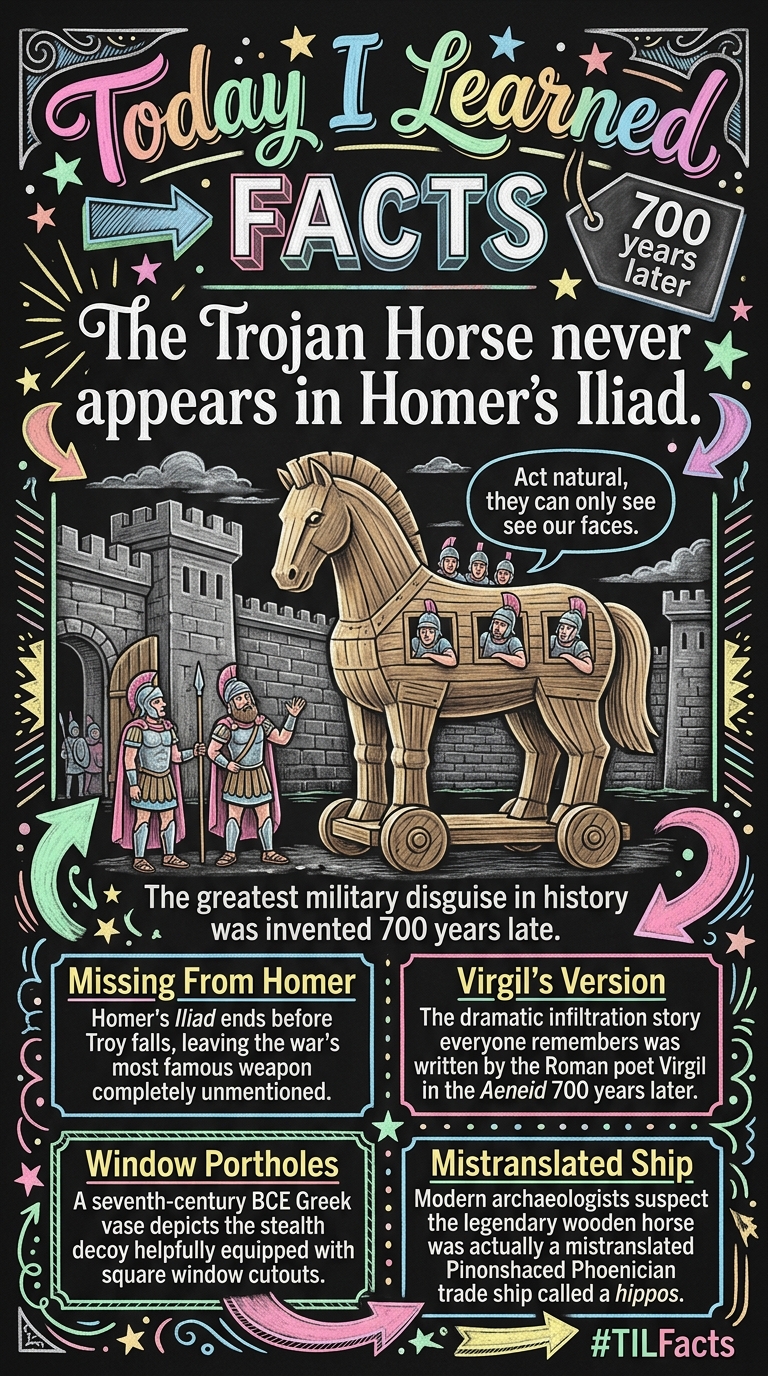
The Trojan Horse never appears in Homer's Iliad, was barely mentioned in The Odyssey, and everything we picture today comes from a Roman poet writing 700 years later.
History's most famous military ruse is completely absent from Homer's Iliad, which ends before Troy even falls. Homer barely gave the wooden horse a passing nod in The Odyssey, leaving the dramatic story we know today to Roman poet Virgil writing seven centuries later. Ancient Greek pottery even depicted the machine with bizarre window portholes, and modern archaeologists suspect the whole myth was just a mistranslated Phoenician trade ship. More