
 Submit a TILF
A standard $20 Wilson volleyball used as Tom Hanks' companion in 'Cast Away' shattered auction records by selling for an astonishing $308,000.
The sources below were found by search, checked to be reachable, and support this claim as stated.
A Wilson volleyball prop from Cast Away, the same $20 sporting goods item Tom Hanks smeared with fake blood and gave tobacco-stick hair, sold at auction for $308,000.
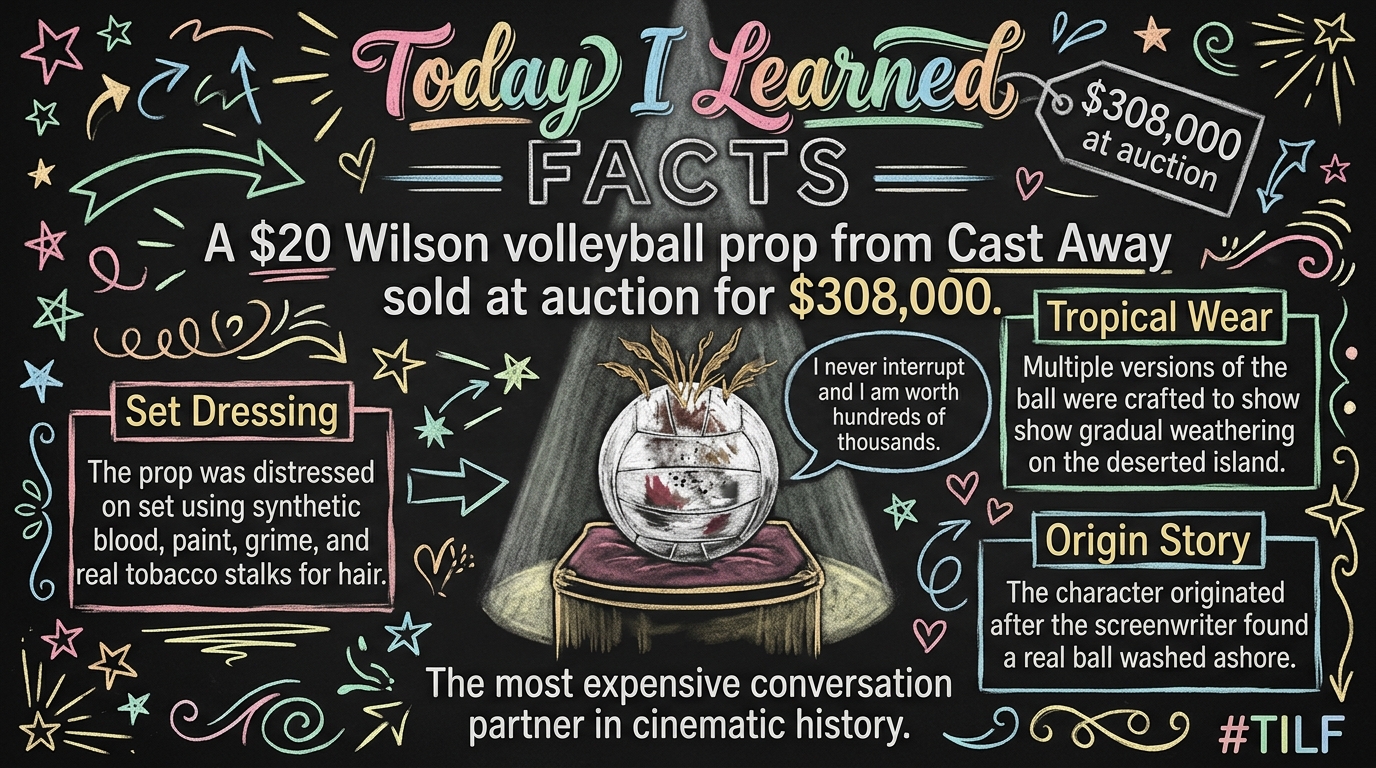
An original Wilson volleyball prop from the film Cast Away sold at auction for $308,000. It started life as an ordinary sporting goods ball before the production team applied simulated bloody paint and tobacco stalks for hair. Decades after co-starring with Tom Hanks, this dirty piece of movie kit fetched the price of a suburban home.
Key Highlights
- 1An off-the-shelf $20 volleyball ended up fetching $308,000 at auction.
- 2The prop featured painted fake blood and real tobacco stalks for hair.
- 3Bidding blew past the initial $80,000 high estimate at Prop Store.
- 4The final sale price equalled the cost of a suburban house.
The Deep Dive
During the filming of Cast Away, Tom Hanks needed an inanimate co-star to keep his stranded character from losing his mind entirely. The production team grabbed standard leather volleyballs right off the shelf, costing around twenty dollars each. To turn sporting equipment into an emotive screen partner, prop artists cut the top, glued in dried tobacco stalks to simulate hair, and painted on a crude face mimicking a bloody palm print.
Props on long, isolated movie shoots take a beating, especially when those shoots involve heavy surf and tropical humidity. The ball auction lot featured intentional weathering applied during filming, including dark distress paint, fading, and fraying stalks from prolonged exposure to salt water. Several balls were made for different stages of the character's four-year ordeal, with each prop showing progressive physical degradation.
In November 2021, the memorabilia auction house Prop Store listed one of the surviving screen-used balls. Estimates originally pegged the lot to sell for somewhere between fifty thousand and eighty thousand dollars. Instead, competitive bidding pushed the final hammer price up to 230,000 British pounds, working out to roughly $308,000 before the buyer's premium was factored in.
People often assume the movie featured only one singular Wilson that survived the entire production. In reality, multiple identical balls were rotated through filming to match the continuity of the character's deterioration, and Wilson Sporting Goods even launched an official promotional line to capitalize on the film's runaway success. But while the replica retail version cost thirty bucks, authentic screen grease carried a massive premium.
The sale puts a stained, battered piece of leather in the same collectible league as genuine cinematic vehicles and haute couture gowns. It raises the broader question of how Hollywood emotional projection transforms mundane mass-produced plastic into priceless cultural artifacts. A twenty-dollar ball managed to out-earn the annual salaries of most working actors simply by having someone yell its name at the ocean.
Sources
Discussion
No comments yet. Be the first to share what you found surprising.